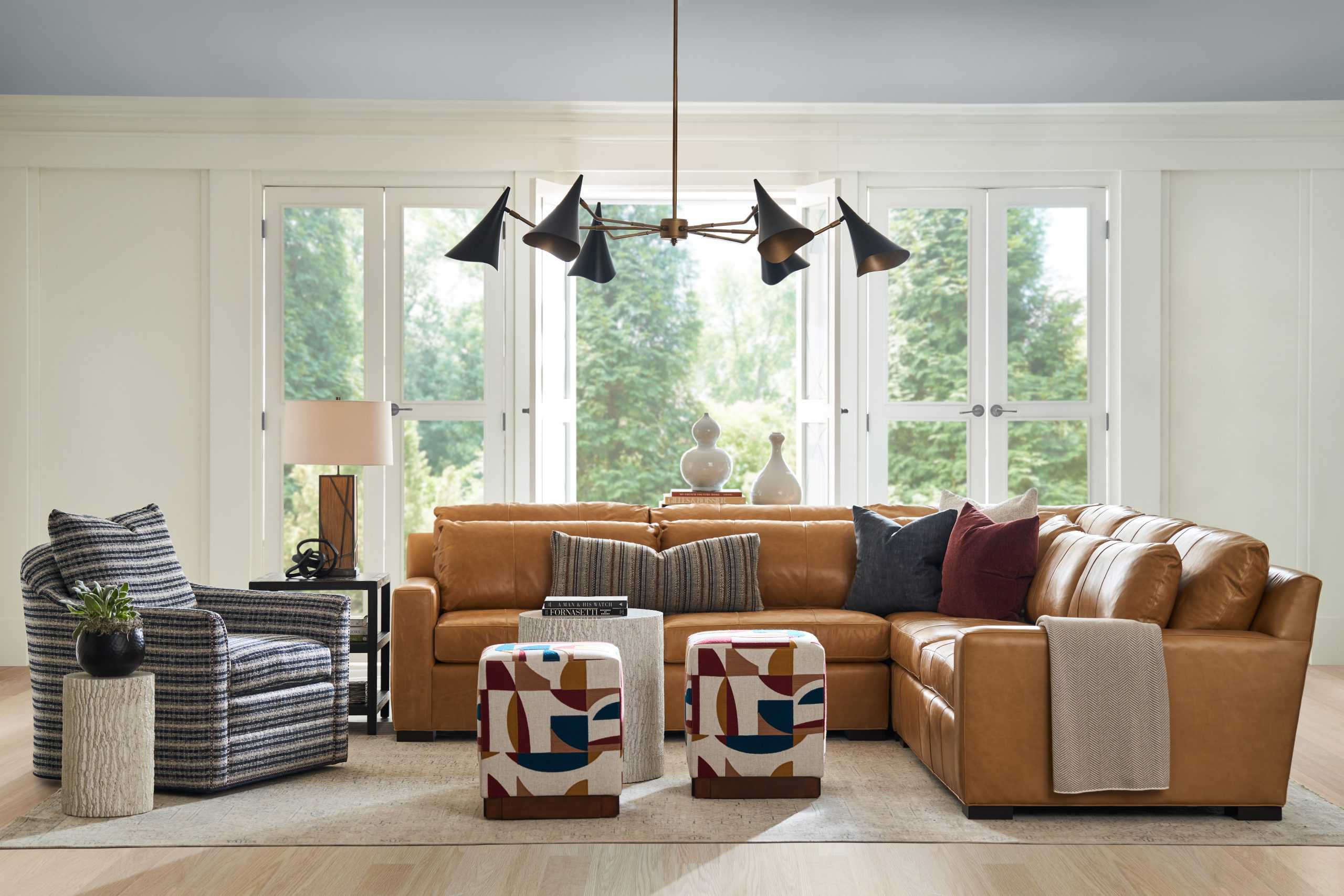
Choosing a rug can feel intimidating and overwhelming.
Between navitgating thousands of options online, trying to understand the difference between various materials and contstruction methods, and figuring out which size will look best in your space… there’s alot to unpack.
Whether you’re in the midst of a rug odyssey or might be in the market in the future, this blog post will help to demistify the vast world of rugs.
Size & Proportion
This is likely the aspect of rug selection that most people struggle with – usually due to cost. Sometimes the jump from one size to the next can be $1000, which is certainly not insignificant. That being said, buying the correct size rug is integral to nailing the look of your space. A rug that’s too small will almost always look like you cheaped out, and the results will be underwhelming.

Most average sized living rooms will need an 8’x10′ or 9’x12′ (or a size near those) in order to have the front legs of main furniture pieces on the rug. For traditional layout or closed concept rooms, a good rule of thumb is to have approximately 6″ of rug underneath the furniture (not just the front legs barely making it on by a wish and a prayer.)
For open concept spaces where the furniture in question is floating, it really looks best to have all legs on the rug, but you can get away with just the front legs if need be.

If you have an unconventionally sized or shaped room, you may need a custom size. This can up the cost significantly and may limit your pattern choices, but it’s worth it for the final outcome.
You’ll also want to consider the scale and proportion of the furniture in your space when thinking about rug size. With sleek, dainty pieces you might be able to get away with a slighty smaller rug than you would with chunky, oversized furniture.

The Bottom Line: When in doubt, go for the larger size, unless it means the rug is buckling against a wall or encroaching beyond the living area or into a hallway.
Materials
Naturals

In terms of choosing a material for your rug, it’s hard to beat wool for most areas of the home. Wool is much easier to clean and maintain than many people think. Due to the naturally present lanolin from the sheep’s skin, wool is relatively water and stain resistant (remember, sheep do live outdoors after all!) A wool rug will also last much longer than any other material, standing up to high traffic areas due to the natural structure of a wool fibre (each strand is made up of millions of coiled springs that stretch, bend, and spring back into shape.)

Jute, seagrass, and sisal are commonly used in flat-woven rugs for an natural and organic aesthetic. You’ll see them often in coastal or bohemian designs. Although these materials may look similar, they behave quite differently and shouldn’t be thought of as interchangeable. Sisal has a rougher texture, is very durable (good for high traffic areas) but doesn’t love moisture. Jute has a soft touch and has a tendency to shed, so is best reserved for lower traffic areas. Seagrass has a slick and waxy coating (due to being grown in wet climates) and is the most water repellent of the three, so is a popular choice for entryways and cottages.
Semi-Synthetics

Semi-synthetic materials are natural fibres that undergo heavy chemical processing to get to their current state. Viscose (a type of rayon made from wood pulp) is a common material in this category used when sheen is desired in a rug design. We tend to discourage choosing a pattern with large amounts of this fibr as it is extremely sensitive to water. It’s fine when used in small amounts, such as highlighting a pattern, but we wouldn’t recommend for high traffic areas. Bamboo silk or bamboo rayon are also popular choices for creating a contrast in sheen levels against the matte appearance of wool – again, fine when used as an accent but be wary when present in large quantities.
Synthetics

For truly messy areas or where there will be prolonged exposure to moisture (think mudrooms, kid’s playrooms, kitchens, etc.) consider either a washable or even an indoor/outdoor rug. Generally these are made of a quick drying synthetic fibres such as polypropylene, PET, or nylon. We wouldn’t usually recommend these for a main living area – they tend to lack the visual weight and texture needed to anchor the space properly (and frankly, some of them look really cheap.) However, manufacturers are using these materials more often to produce rugs that look and feel closer to woven or tufted wool, so rugs made of these synthetics should be approached on a case by case basis.

The Bottom Line: For most purposes, 100% wool (or as close as possible) rugs will always win for a balance of durability, cleanability, and aesthetics.
Construction
Hand-Knotted

The most traditional weaving method, hand-knotting will produce the best quality rugs, but at a price. As the name would suggest, these rugs are made by an artisan hand tying thousands of individual knots. Due to this labour intensive process, true hand-knotted rugs will cost upwards of $10,000 for an 8×10 size, but will last decades. Any vintage Persian or Oriental rugs you come across will surely be hand-knotted. Most rugs of this category will be wool, but some will include silk or cotton.
Hand-Tufted & Hand-Hooked

Both hand-tufted and hand-hooked rugs are made in the same way, using a tufting gun that punches the threads into a backing to create a loop. The main difference between the two is that tufted rugs have the surface of the rug shaved to create a soft and plush pile, whereas the loops of hooked rugs remain in tact – creating a harder wearing but coarser finish. A majortity of the rugs we order for clients fall into one of these two cateogories due to their balance of durability, affordability, and aesthetics – offering great value.

Machine-Made

Also known as power-loomed or machine-woven, machine-made rugs are produced using large machines that weave the threads into the rug’s backing. They are usually made with synthetic fibres and are very fast and inexpensive to produce, which makes them appealing to a budget concious consumer. However, this variety of rug will usually not last more than a few years in a high traffic area, so keep that in mind when thinking about cost per use. Generally, machine-made rugs are very thin and can have a tendency look cheap, although the advancements in this category over the past few years has made them a stronger contender in the industry for budget shoppers.
Flat-Woven

Flat-woven rugs are usually made of naturals like seagrass, jute, or cotton (unless they are indoor/outdoor, in which case they will be synthetic.) They have absolutely no pile and are very flat (usually less than 0.5″), woven in a similar fashion to fabrics. Because they are not made on a loom and do not have a backing, they are usually reversible to some degree, and absolutely require a rug pad to prevent slippage on hard floors. This style of rugs tends to work well in more casual spaces due to their organic, laid-back look and feel.
The Bottom Line: Unless you have the budget for hand-knotted (in which case, go for it!) your best
Colour & Pattern

This is the fun part! Your rug, like a piece of artwork, can act as a wonderful “connector” that brings together colours from various pieces throughout the room. In fact, colour schemes that at first seem disjointed can all of a sudden make sense with the right rug.
A rug can also be a great source of inspiration, and it’s often a good place to start when desiging your space. There are an infinite number of drapery and upholstery fabrics, but a more limited amount of rugs that fit your colour scheme, budget, and are availble in a pattern you like. For this reason, unless you’re willing to shell out for a fully custom design such as in our Bespoke Rug Program, you’ll want to make sure you nail down a rug before ordering other furniture and decor.

While a rug can be a fun way to incorporate colour, don’t rely on it to do all the heavy lifting. Plopping a colourful rug in an other wise totally neutral space will create a disconnect. There should be some connecting thread between pieces that allow them to speak to one another and draw the eye around the room.

When it comes to patterns, much of the decision comes down to person preference. You’ll want to decide if you like a traditional pattern (such as seen in many Persian and Oriental style rugs) or something more modern. If you have a very traditional home and want to update the look, a contemporary or transitional style rug can be a very effective way to do this (just be mindful that you’ll likely have to update a few other elements in the space in order for the overall effect to feel harmonious.) Likewise, if you’d like to add some character to an otherwise contemporary space, a vintage (or vintage inspired) rug can bring a sense of warmth and personality to the overall design scheme.

When layering patterns within a room, you need to consider scale – too many patterns of the same size and scale end up creating white noise. For example, if you have a small printed fabric on a pair of accent chairs, try to choose a rug with larger scale pattern so they don’t fight and end up drowning eachother out.
If you have a lot of pattern and colour in your room already, you might find that a very soft and quiet neutral rug helps to ground the space and offer a blank canvas of sorts for your other furniture and decor. If you do go this route make sure the rug has some texture to avoid looking too plain.

The Bottom Line: Colour and pattern in your rug is a highly subjective matter. Just be sure the rug either connects with at least one other piece in the room, and don’t save rug shopping for last.
Rousseau’s Design Studio & Rug Gallery
We firmly believing that seeing, touching, and feeling is an integral part of the rug purchasing experience. Our design studio and gallery, housed in our Carriage House building in our back courtyard is the perfect setting to be inspired by hundreds of beautiful rug samples. Can’t find what you’re looking for? We’d love to help you on your journey.


Make an appointment today by phone (905) 668 – 3483 or email [email protected]