As we trudge through the gloomy days (and still too long nights) of January, having the proper lighting in your home becomes even more crucial. And no, we aren’t talking about the 20 pot lights your contractor insisted on installing during your renovation.
January is actually the perfect time to reevaluate your lighting scheme – the lack of daylight coupled with missing the warm, inviting glow of Christmas lights allows us to really see where we are missing some much needed illumination.
However, lighting should not be treated as purely utlitarian, but instead as functional artwork in the home. Cheap, basic, or out of place lighting can tank the overall aesthetic of a room very quickly. On the flip side, carefully chosen, good quality, and unique lighting can elevate an otherwise very casual and basic space. This goes way beyond the physical properties of the light fixture… it’s also how it changes the atmosphere of the space when lit.
The reality is, you need lighting in your home – so it might as well be done well. In this post we’re going to discuss how you can best utilize various types of lighting to truly make your home glow.
Table Lamps
This is a category of lighting that basically everyone already has in their home, but often where see a lot of missteps, or truthfully just missed opportunities to add warmth and character.

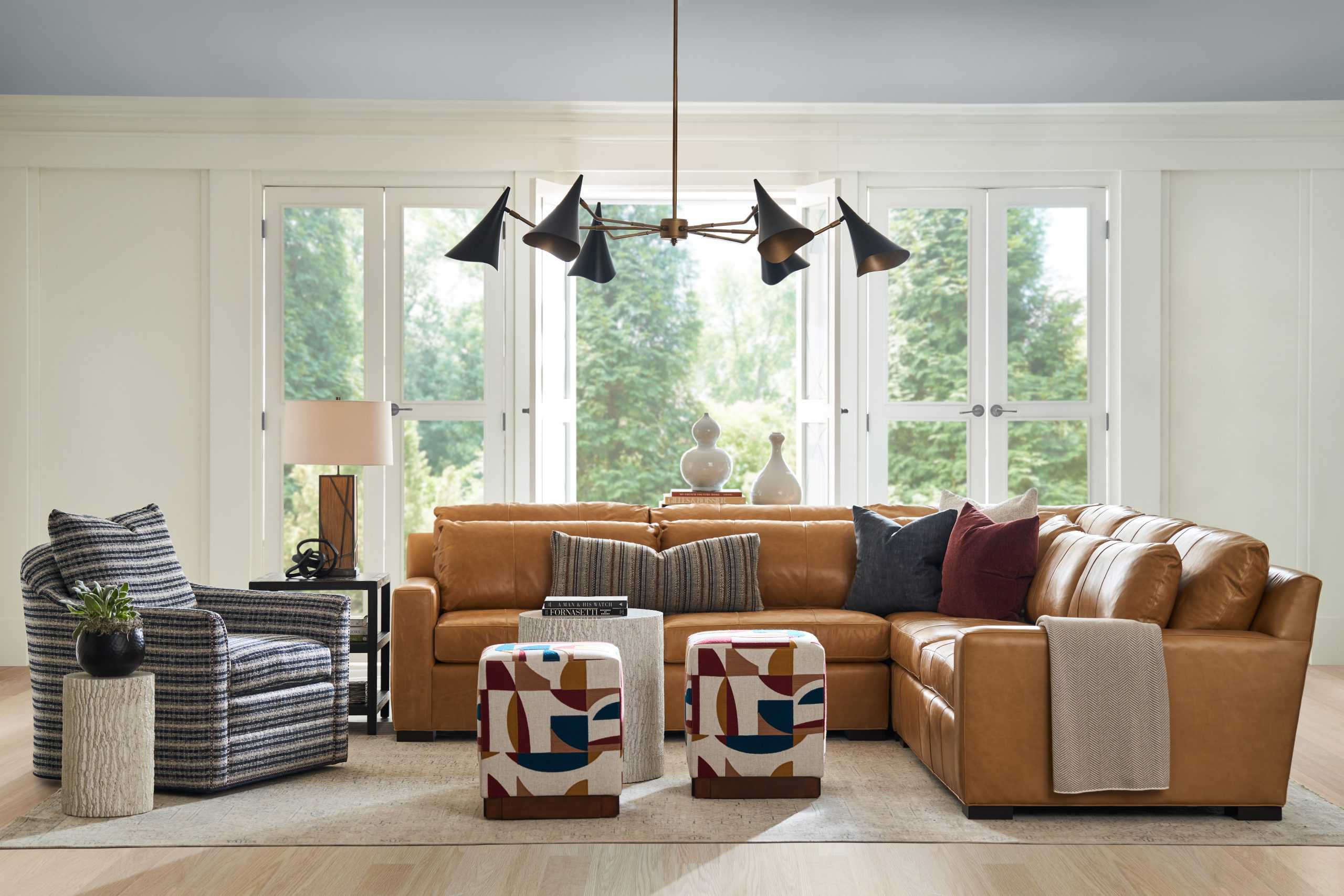
In terms of proportion, you’ll want to look at not only the surface the lamp will be sitting on but the surrounding furniture. An oversized lamp can work on a small table as long as it and any other adjacent pieces also have heavy visual weight. The look above would feel out of proportion if the end table had slim, delicate legs and the sofa had narrower arms. Likewise, a very fine or petite lamp might feel underwhelming next to these chunkier pieces (Pro tip: if you have an antique lamp that’s too small for any of your main living areas, it may work beautifully perched atop a hall console, bookshelf, or cabinet.)

Generally speaking, a pair of matching lamps flanking a sofa or bed usually makes the most sense, but you can use two different lamps as long as they are the same height and a similar visual weight (Pro tip: if you have two lamps that are different heights, or your end tables are different heights, you can use a stack of coffee table books to make them level.)
When choosing table lamps for your bedroom, you also need to consider the height of your night tables in relation to the height of your lamp base to avoid staring at a bare bulb when reading in bed – not a cute look.

Think of table lamps like functional sculptures that beautify your space while providing much needed light. There is absolutely no reason to have boring lamps in your home. This doesn’t mean you need to go wild and crazy or step outside your comfort zone, but use your lamps as an opportunity to introduce an artful flair to your space, as opposed to purely functional pieces.
Chandeliers
Chandeliers draw the eye upward and cast an even, general light across a room. They are an opportunity to create a real “wow” factor in your home, and provide visual balance to your space.

The chandelier is often a major focal point in the space, and can be very costly, so you want to get this one right. While some resources will provide specific ratio in regards to sizing, we are hesitant to do so as there are many factors to consider such as the visual weight of pieces in the space, the style of chandelier in question, and level of impact you’d like to make. Deliberately oversized or undersized chandeliers can be a valid design statement, so you don’t necessarily need to restrict yourself to a certain size.
Because ceiling fixtures are visible from a distance, you’ll want to think about what other lighting it will be coordinating with both in the the room and any adjacent spaces – we don’t want a matching set, but it should relate in some way, whether it be the shape, finish, or design style. You can go really funky and have this piece act more like a sculpture, or go simple and classic, especially if there is already a lot going on in the space.

You’ll also want to consider sight lines beyond the room itself. For example: if you have a spectacular view or fabulous piece of art that the chandelier will be in front of, maybe consider something airy so as not to obscure this feature.
Some chandeliers give off quite a bit of downlight, and others really more of a soft ambient glow, so you’ll also need to pay attention to wattage and consider if the bulbs are exposed or covered, as this will affect how much light is cast within the room and on a surface below.

Wall Sconces
Sconces can be a really fun and beautiful way to frame a piece of artwork, a doorway, a mirror, or add some dimension to a hallway. They can also be an interesting alternative to bedside lamps or even table lamps in a living room when you are short on surfaces.

There are many options available now – from uber traditional to very sleek and modern. Think of them as a pair of earrings for your wall – the finishing touch to an otherwise beautiful space. Many of the higher end options will be hardwired only, but plug-in style are available within some brands.

We wish more folks used sconces in their homes – they are such an under-utilized lighting category and add oodles of charm, elegance, and style to any space.
Mini Lamps
This is a really fun category we have been seeing a lot of in the past few years. Mini lamps are usually between 12″ and 16” in height overall, and make the perfect little adornment for kitchen counters, bookshelves, consoles, and dressers/chests.

Generally speaking, we would not place these on end tables in place of a table lamp – think of them more like lighted sculptures, and place them like you would a decorative vase. There’s just something very charming about a little lamp perched atop an unexpected surface.

Consider Your Bulb Choice
This is an extremely important factor – nothing kills a good light fixture faster than the wrong bulb. Specifically a cool toned bulb giving hospital vibes in your living room.
We recommend warm or soft white LED bulbs between 2700-3000 Kelvins for most residential spaces to mimic incandescent bulbs (the higher the number, the cooler the temperature) You can go slightly higher in Kelvins (closer to 3000) for overhead lighting in rooms like kitchens, bathrooms and offices that need brighter task lighting. Dimmer switches are your friend here though, because once the work is over, you’ll want the option to bring those puppies way down and set the mood. No one wants to attend a dinner party that feels like you’re sitting in a a dental office.
It’s a good idea to keep bulb temperature relatively consistent throughout the room for lights you know you will be using at the same time and certainly use the same bulb in a matching set of lights.
As nice as it may sound in the dreary depths of winter, avoid daylight bulbs like the plague and thank us later.
Shades
The fastest way to date a light fixture is by using the wrong shade. Toss any yellowed or tattered shades, and consider replacing old pleated shades unless you are leaning into a very traditional or eclectic style. (Note: Pleated shades ARE having a comeback, but newer variations are sleeker. Plus, fabric does have a limited lifespan.) Antique lamps can be completely revived by having a new, updated shade custom made and this can be a really fun way to incorporate a unique piece into your home.

Cheap shades can usually be spotted a mile away as they are often blindingly white and very thin. If you absolutely love the base and the lamp is at a good price, have a custom shade made. We don’t often recommend natural (unbleached) linen shades as they will often read pink at night or in darker conditions when the light bulb is on – so test before committing.
Patterned or coloured shades (we love black for a touch of drama) are also an option, so don’t feel limited to plain white.

Lighting is integral to how your home functions as well as how it makes you feel. Good lighting immediately puts you at ease and makes the space feel cozy and inviting. Thoughtfully chosen light fixtures will enhance the architecture of your home as well as your furniture and decor, whereas unsuitable lighting or pieces that feel out of place will disrupt the harmony of your space.
So, don’t make lighting a second thought – instead, think of it as a vital element in the design of your home.